A history of "HELP"
The early days
The «HELP» organization was first started in Javea in 1977 by Barbara Bridgen, who soon discovered that most people who retire to Spain arrive as a couple, but once a partner dies, the others can experience difficulties especially with illness or infirmity.
In contrast, the Spanish family unit is still strong today that many of the Social Services that are available in Britain are not required here, because Spanish families share nursing and other tasks when a relative is either admitted to hospital or becomes ill at home. (In 2024 the situation is still similar to this except that the ‘young’ ex-pat retiree has ‘matured’ somewhat over the years!)
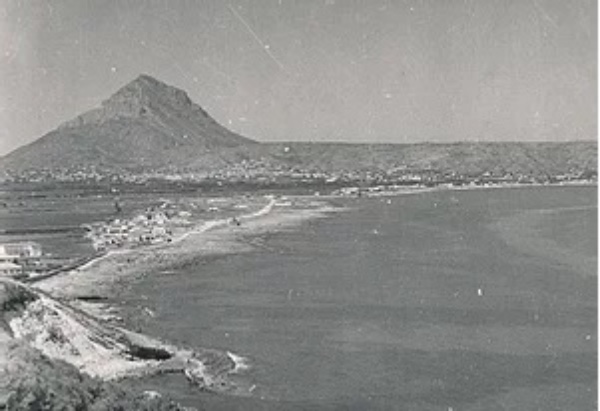
At that time, Javea was a sleepy fishing village, and not the vast sprawling town of today, having two doctors who only spoke Spanish. Equally, there was no local hospital, and very few people had telephones; also few if any, of the Spanish services spoke anything but Spanish and there were no translation services available.
As expatriates began to settle in the area, there was an increased need for general help and support especially in medical emergencies.
Barbara Bridgen discussed with a group of fellow Britons at her Javea home the best way of offering assistance to any British person needing help through illness, disability, old age, loneliness, or merely acting as interpreters. It took twelve months to get the group started, manned entirely by volunteers, and «HELP» was formally launched in 1978 by Charles Thompson, the first chairman. Money was also a problem, but a Christmas bazaar and regular bring-and-buy sales soon managed to help finance the group. From the outset, the Javea Original Charity Shop and the Teulada
Lions Club were a constant source of support.
The early days
The «HELP» organization was first started in Javea in 1977 by Barbara Bridgen, who soon discovered that most people who retire to Spain arrive as a couple, but once a partner dies, the others can experience difficulties especially with illness or infirmity.
In contrast, the Spanish family unit is still strong today that many of the Social Services that are available in Britain are not required here, because Spanish families share nursing and other tasks when a relative is either admitted to hospital or becomes ill at home. (In 2024 the situation is still similar to this except that the ‘young’ ex-pat retiree has ‘matured’ somewhat over the years!)
At that time, Javea was a sleepy fishing village, and not the vast sprawling town of today, having two doctors who only spoke Spanish. Equally, there was no local hospital, and very few people had telephones; also few if any, of the Spanish services spoke anything but Spanish and there were no translation services available.
As expatriates began to settle in the area, there was an increased need for general help and support especially in medical emergencies.
Barbara Bridgen discussed with a group of fellow Britons at her Javea home the best way of offering assistance to any British person needing help through illness, disability, old age, loneliness, or merely acting as interpreters. It took twelve months to get the group started, manned entirely by volunteers, and «HELP» was formally launched in 1978 by Charles Thompson, the first chairman. Money was also a problem, but a Christmas bazaar and regular bring-and-buy sales soon managed to help finance the group. From the outset, the Javea Original Charity Shop and the Teulada
Lions Club were a constant source of support.
Growth of «HELP» Marina Alta
The Denia group wanted to organize a formal network and so they set up a committee and it was inaugurated in 1984. The first AGM was held in March 1985 and at that time they had 49 volunteers; a small handbook was compiled, and a few items of equipment were bought.
From these small beginnings the organization grew, and within a year the number of volunteers in the Denia area had grown to 75, and a luncheon club had been established. This was set up to help those who had no transportation and to provide some social support to the elderly.
When the Marina Alta Hospital at La Pedrera opened in Denia, “HELP” began to change. It was no longer merely a support service on a neighborhood basis, there were calls for interpreting services from almost everyone attending the hospital no matter from which area they came. A team of interpreters was established over the next few years, but the setting up of this service was by no means an easy task, with Spanish resistance to what they saw as Foreign intervention having to be overcome before the volunteers were even allowed into any hospital.
Today the “HELP” organization and its members are welcomed into both of the Denia hospitals, and our Help desk, Interpreters and receptionist services are valued very highly.

In 1998 a charity shop was opened in La Xara with the aim of raising money to buy essential equipment for the hospital, equipment for loan, and help with general running costs. The success of the charity shop led to the rental of larger premises a few years later.
This in turn increased sales and revenue which allowed more equipment to be bought for loan to the general public, e.g. electric beds and hoists.
Growth of «HELP» Marina Alta
The Denia group wanted to organize a formal network and so they set up a committee and it was inaugurated in 1984. The first AGM was held in March 1985 and at that time they had 49 volunteers; a small handbook was compiled, and a few items of equipment were bought.
From these small beginnings the organization grew, and within a year the number of volunteers in the Denia area had grown to 75, and a luncheon club had been established. This was set up to help those who had no transportation and to provide some social support to the elderly.
When the Marina Alta Hospital at La Pedrera opened in Denia, “HELP” began to change. It was no longer merely a support service on a neighborhood basis, there were calls for interpreting services from almost everyone attending the hospital no matter from which area they came. A team of interpreters was established over the next few years, but the setting up of this service was by no means an easy task, with Spanish resistance to what they saw as Foreign intervention having to be overcome before the volunteers were even allowed into any hospital.
Today the “HELP” organization and its members are welcomed into both of the Denia hospitals, and our Help desk, Interpreters and receptionist services are valued very highly.
In 1998 a charity shop was opened in La Xara with the aim of raising money to buy essential equipment for the hospital, equipment for loan, and help with general running costs. The success of the charity shop led to the rental of larger premises a few years later.
This in turn increased sales and revenue which allowed more equipment to be bought for loan to the general public, e.g. electric beds and hoists.
Royal recognition
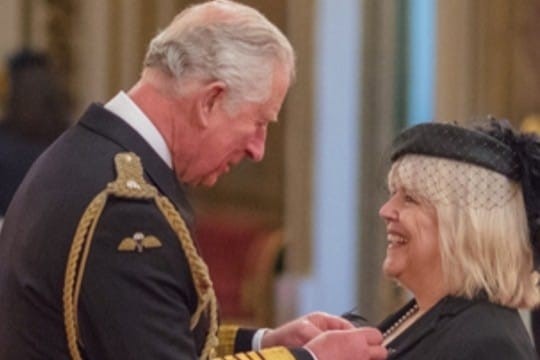
“HELP’s” President Mrs Candida Wright has received an MBE in the 2019 New Year Honours List. Candy was contacted by the British Ambassador in Madrid, Mr Simon Manley, in November of 2018 to ask her if she would accept the award. Candy attended Buckingham Palace for the investiture on the 16th of May this year to receive the award from His Royal Highness, the Prince of Wales. The MBE was granted for her work helping people in the community here in Spain.
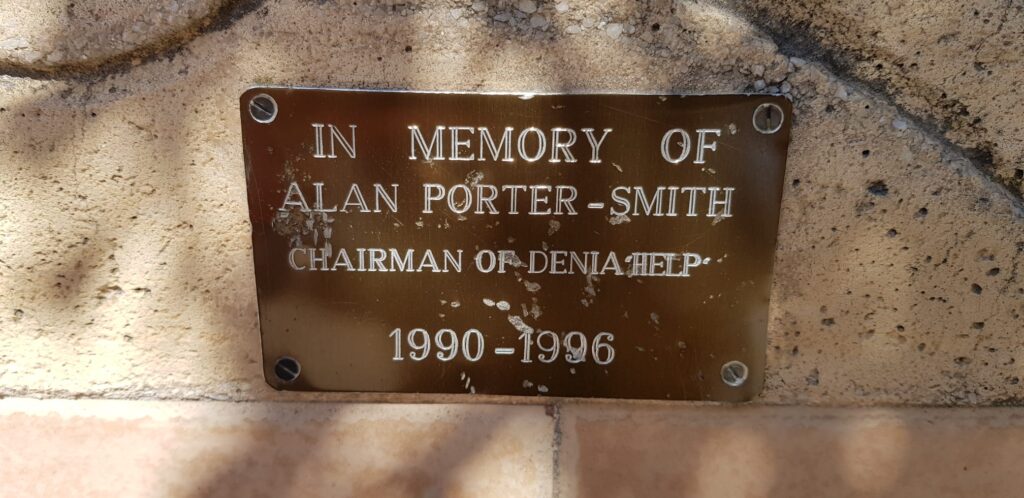
Jill Porter-Smith joined the Denia “HELP” organisation shortly after its inauguration in 1984, with her husband serving as chairman for six years. The opening of the Marina Alta Hospital in Denia resulted in even more requests for assistance, and a hospital visiting service was organized that is still in place today. Jill was at Buckingham Palace in 1999 to receive the MBE awarded to her in the New Years’ Honours List, one of the first to be awarded to someone living in Spain, for her services to the British Community on the Costa Blanca.
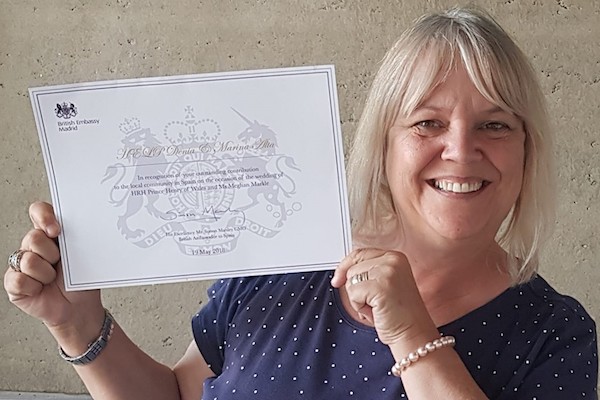
Subsequently, in the Queen’s Birthday honours list of 2009, another “HELP” volunteer, Joy Goodricke, was honoured with an MBE. A long serving member of “HELP”, she has been involved in many ways over the years, and was particularly involved with the reform of the Charity Shop, cajoling Spanish businesses into donating materials free; she had also worked tirelessly on the “HELP” care team.
Today
The early problems over funding have long since been eased, with income from our charity shops, equipment loans, donations, support received from grateful patients, theater groups and clubs, other local charities and local businesses.
Surplus money is regularly passed back into the community in the form of new medical equipment, Food for the Soup Kitchens and Franciscan Mens Shelter, Care in the home, our Parkinson’s Support Group, vouchers for the Red Cross at Christmas for children and emergencies from natural disasters in the local provinces . The Spanish health service is as short of funds as the UK NHS, but over the years “HELP” has been able to provide assistance in many ways – providing, ‘Holter’ machines for heart monitoring , defibrillators , and even a portable ECG unit for use on home visits, which can be plugged into a telephone line for instant diagnosis.
Many local Health Centers have also received electronic blood pressure monitors, pulse oximeters, Wheelchair usable electronic scales for dialysis patients and even medical examination couches and paper shredders just to name a few items!
Over recent years 50+ special hospital beds have been bought, and these are loaned out to patients in private homes with advanced illness and «end of life» requirements. The “Hospital Style” beds are kept locally by “HELP”, and are in such constant use that further purchases will be made when the need becomes apparent.
In December 2008, our “HELP” Centre” in La Xara was opened after our Charity Shop moved to new premises. The idea was to provide a couple of days relief for carers, and some social contact for people living alone. It also became our call and information centre and the central store for our equipment. All of our equipment is offered on loan with a minimal donation.
In June 2012 a “Respite Care Service” was inaugurated, and a second Charity Shop was opened in Moraira. This partly provided a focus of interest in the south of our large area, but mainly provided a source of income to help pay for the Respite Care service which was introduced at the same time. The Respite Care Service allowed a caregiver of someone with long-term nursing or care needs at home, to have a break, knowing that their loved one is in a safe environment and receiving appropriate care. “HELP” contracted a local Residential Care Home in Javea to provide this care so that the carer could have a break, relax or just catch up on all those jobs which were impossible while caring for someone.
In October 2013 the “Parkinsons Support Group” was formed, which meets monthly on the last Monday of the month in our Activity Centre to provide mutual support. Those attending are able to benefit from sharing experiences and information with others.
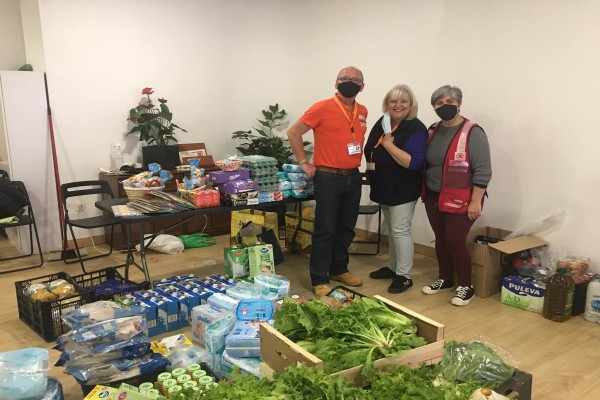
In November 2013 we opened a new “Office and Equipment Store” and transferred our call and information centre and equipment store to the new office next to our Charity Shop in La Xara. This has allowed us to deal with matters in more appropriate surroundings. Demands now made on the volunteers range from requests for a walking frame or wheelchair after an operation, to help with repatriation for those unable to cope alone and also how to donate a body for medical science.
In 2014 our Help Centre underwent extensive renovation with the creation of a Therapy Treatment Room. It is now known as the “HELP Activity Centre” and as well as being used for existing Help activities, it will be available for use by other organisations, clubs, U3A groups or charities as a community resource.
Since its early days “HELP” grew in size with the number of people offering their time as volunteers increasing to over 300 members spreading from Pego in the north along the coast to Calpe in the south. Sadly, after Covid and Brexit our volunteer numbers are now approx 120 people. However, we are able to maintain the running of the association with all of the areas covered. We have local area co-ordinators in Benitachell, Denia, Javea, and Moraira, Teulada who are the first point of contact for local residents. These area co-ordinators also have details of all HELP volunteers living in their area who are willing to provide assistance when called on.
The organization has made contact with relatives in Britain on many occasions when people have been found to be in desperate trouble. It is really for relatives, however far apart, to take responsibility for their family members, but all we can do in reality here is try to make life easier in the short term for those who decide to stay while a long term solution is found.
Today
The early problems over funding have long since been eased, with income from our charity shops, equipment loans, donations, support received from grateful patients, theater groups and clubs, other local charities and local businesses.
Surplus money is regularly passed back into the community in the form of new medical equipment, Food for the Soup Kitchens and Franciscan Mens Shelter, Care in the home, our Parkinson’s Support Group, vouchers for the Red Cross at Christmas for children and emergencies from natural disasters in the local provinces . The Spanish health service is as short of funds as the UK NHS, but over the years “HELP” has been able to provide assistance in many ways – providing, ‘Holter’ machines for heart monitoring , defibrillators , and even a portable ECG unit for use on home visits, which can be plugged into a telephone line for instant diagnosis.
Many local Health Centers have also received electronic blood pressure monitors, pulse oximeters, Wheelchair usable electronic scales for dialysis patients and even medical examination couches and paper shredders just to name a few items!
Over recent years 50+ special hospital beds have been bought, and these are loaned out to patients in private homes with advanced illness and «end of life» requirements. The “Hospital Style” beds are kept locally by “HELP”, and are in such constant use that further purchases will be made when the need becomes apparent.
In December 2008, our “HELP” Centre” in La Xara was opened after our Charity Shop moved to new premises. The idea was to provide a couple of days relief for carers, and some social contact for people living alone. It also became our call and information centre and the central store for our equipment. All of our equipment is offered on loan with a minimal donation.
In June 2012 a “Respite Care Service” was inaugurated, and a second Charity Shop was opened in Moraira. This partly provided a focus of interest in the south of our large area, but mainly provided a source of income to help pay for the Respite Care service which was introduced at the same time. The Respite Care Service allowed a caregiver of someone with long-term nursing or care needs at home, to have a break, knowing that their loved one is in a safe environment and receiving appropriate care. “HELP” contracted a local Residential Care Home in Javea to provide this care so that the carer could have a break, relax or just catch up on all those jobs which were impossible while caring for someone.
In October 2013 the “Parkinsons Support Group” was formed, which meets monthly on the last Monday of the month in our Activity Centre to provide mutual support. Those attending are able to benefit from sharing experiences and information with others.
In November 2013 we opened a new “Office and Equipment Store” and transferred our call and information centre and equipment store to the new office next to our Charity Shop in La Xara. This has allowed us to deal with matters in more appropriate surroundings. Demands now made on the volunteers range from requests for a walking frame or wheelchair after an operation, to help with repatriation for those unable to cope alone and also how to donate a body for medical science.
In 2014 our Help Centre underwent extensive renovation with the creation of a Therapy Treatment Room. It is now known as the “HELP Activity Centre” and as well as being used for existing Help activities, it will be available for use by other organisations, clubs, U3A groups or charities as a community resource.
Since its early days “HELP” grew in size with the number of people offering their time as volunteers increasing to over 300 members spreading from Pego in the north along the coast to Calpe in the south. Sadly, after Covid and Brexit our volunteer numbers are now approx 120 people. However, we are able to maintain the running of the association with all of the areas covered. We have local area co-ordinators in Benitachell, Denia, Javea, and Moraira, Teulada who are the first point of contact for local residents. These area co-ordinators also have details of all HELP volunteers living in their area who are willing to provide assistance when called on.
The organization has made contact with relatives in Britain on many occasions when people have been found to be in desperate trouble. It is really for relatives, however far apart, to take responsibility for their family members, but all we can do in reality here is try to make life easier in the short term for those who decide to stay while a long term solution is found.
The future
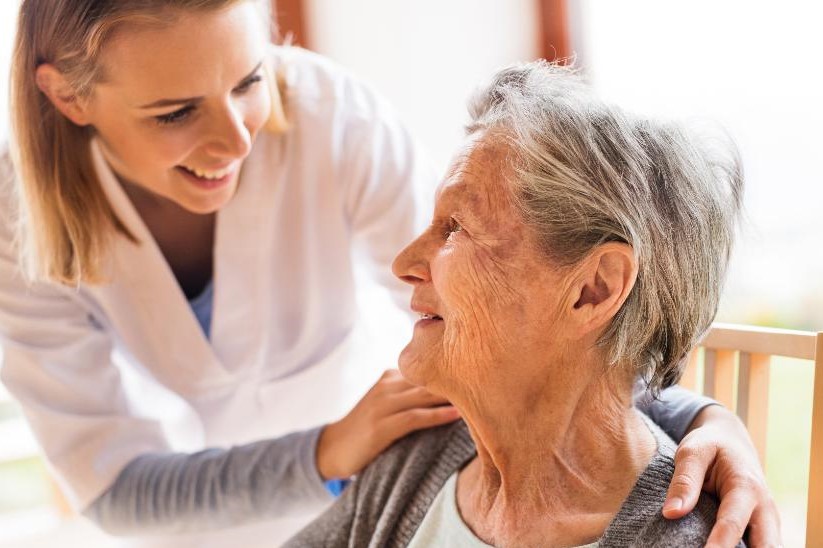
Nursing and Home Care Service
In the Valencia region there is very little community care available for those who are ill or for those discharged from hospital still needing some specialized professional care.
In these situations it is not appropriate for “HELP” volunteers to assist, and there is a need to call in ‘the professionals’.
Through our office, people can contact us for assistance in finding these professionals.
The future
Nursing and Home Care Service
In the Valencia region there is very little community care available for those who are ill or for those discharged from hospital still needing some specialized professional care.
In these situations it is not appropriate for “HELP” volunteers to assist, and there is a need to call in ‘the professionals’.
Through our office, people can contact us for assistance in finding these professionals.